



CULTURAL
EXPERIENCES
Berthing at the meeting point of two seas and two worlds opens the door to journeys from the Roman Empire to contemporary art. From Alcaidesa Marina, you have more than a first-class berth: you have the perfect base for exploring the rich history of the Strait, where Europe and Africa almost meet.
Here, geography shapes culture. Within a short distance, you can move from wartime fortifications to lively North African souks, from ancient Phoenician remains to exciting contemporary art destinations. Every wind brings a different story, and every day can become an Atlantic or Mediterranean adventure.
This strategic location offers a rare chance to explore history first-hand. From the cross-border character of Gibraltar to the treasures of inland Andalusia, your cultural journey begins here. Consider this your guide to the Strait and beyond.
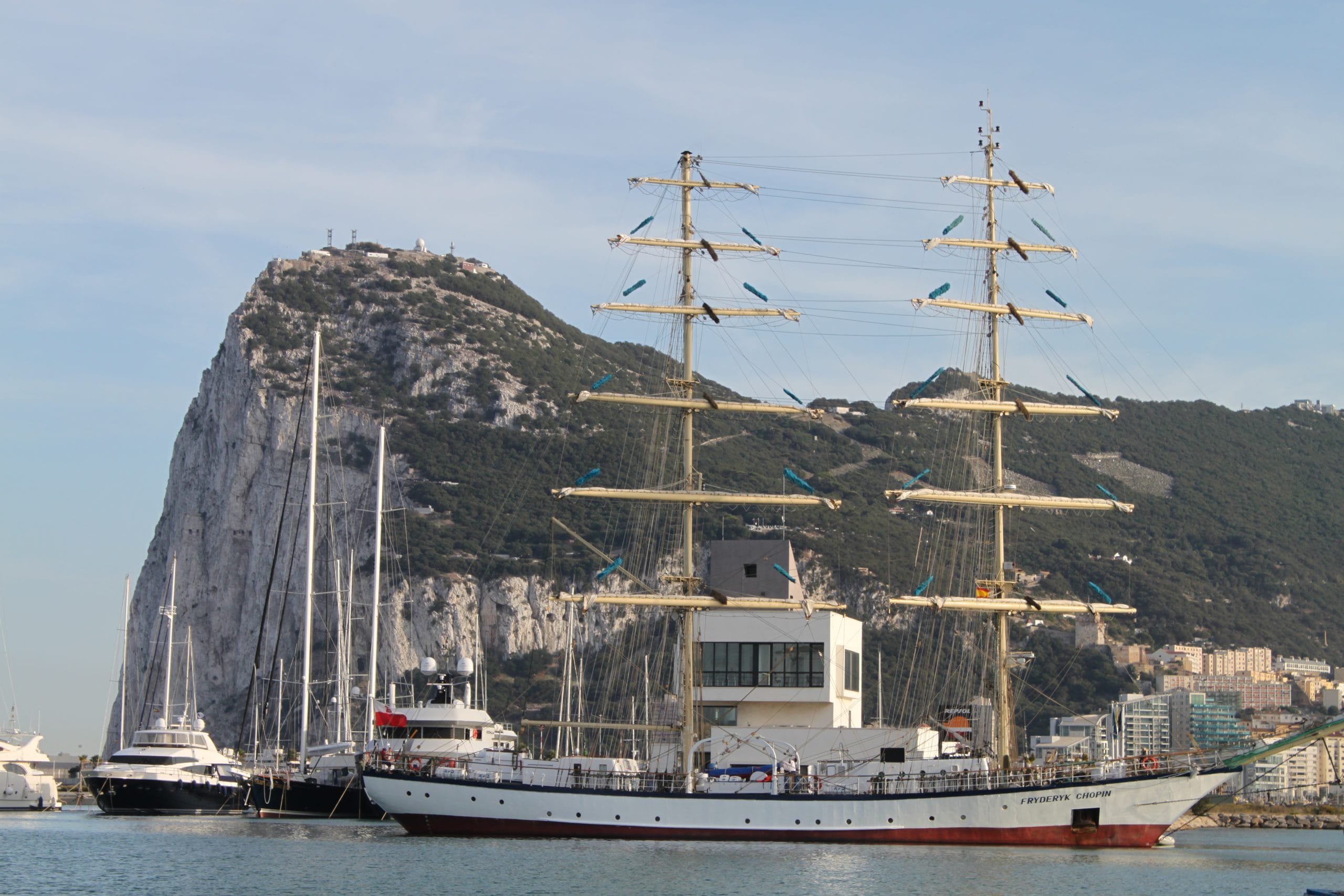
THE IMMEDIATE SURROUNDINGS:
GEMS JUST STEPS FROM YOUR BERTH
La Línea de la Concepción:
Identity and Resilience
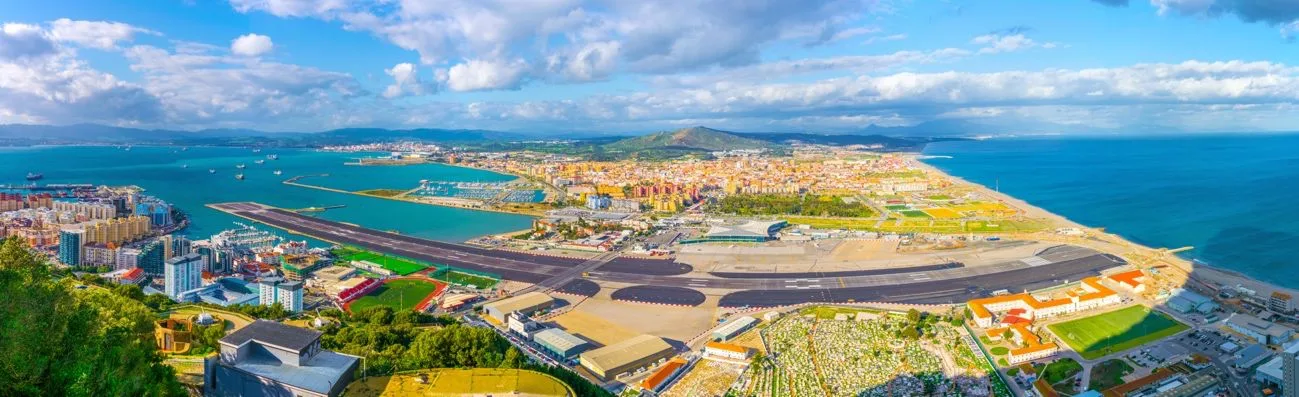
Beyond its shopping streets, La Línea de la Concepción reflects Europe’s geopolitical history and the resilience of its people. Located on the isthmus connecting Spain with the Rock, this young border town has a distinct identity. The light of the Strait has inspired artists, while its strategic position has shaped its military and social history.
- Cruz Herrera Museum: Housed in a historic villa surrounded by gardens, this museum displays works by José Cruz Herrera, one of Spain’s leading twentieth-century portrait painters. His luminous, colourful paintings celebrate the character and beauty of local women.
- Second World War Bunkers: Scattered along the coast and in the park, these fortifications formed part of the ‘Strait Wall’. They tell the story of a war in which Spain was officially neutral but prepared extensively for the possibility of invasion.
- Santa Bárbara Fort: The remains of an eighteenth-century defensive line reveal the history of the sieges of Gibraltar and the military importance of a town that began as a defensive boundary.
- The Atunara Neighbourhood and Its Cuisine: The town’s traditional fishing heart. Come here to taste the famous volaores (sun-dried flying fish) and grilled octopus. Its low houses and fishing harbour preserve the character of a community deeply connected to the Strait.
- Princesa Sofía Park and Beaches: This large green space at the foot of the Rock offers wonderful views. Beaches such as Levante and Sobrevelastretch for kilometres, overlooking Africa and offering a close-up experience of the strong easterly Levante wind.
Gibraltar (The Rock):
A Legendary Enclave
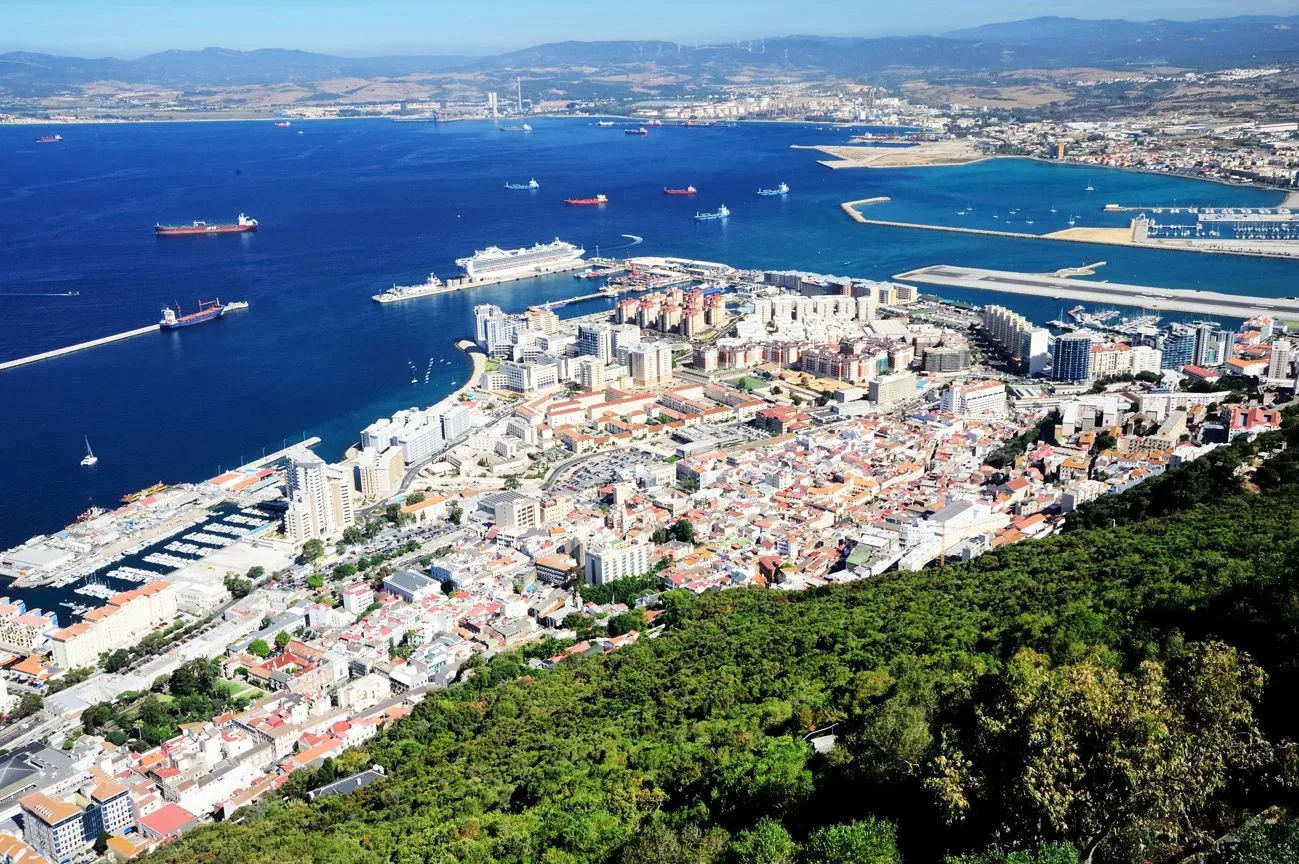
Standing between continents and seas, Gibraltar is more than a geographical landmark: it is a cultural melting pot where British traditions meet Mediterranean character.
This legendary Pillar of Hercules offers a journey from prehistoric caves and wartime tunnels to the heights guarded by the famous Barbary macaques. Red telephone boxes and colonial architecture coexist with dramatic natural scenery, creating a distinctive borderland atmosphere.
- Nature Reserve and St Michael’s Cave: Reachable by cable car, this is home to the famous macaques, Europe’s only free-ranging monkeys. St Michael’s Cave is a spectacular natural cathedral of stalactites, now also used as an auditorium with atmospheric lighting.
- Underground History: More than 50 kilometres of tunnels run through the Rock. From the eighteenth-century Great Siege Tunnels to the underground facilities of the Second World War, Gibraltar has a remarkable hidden history.
- The Skywalk and O’Hara’s Battery: A glass walkway 340 metres above sea level offers panoramic views of two continents and three countries, near impressive historic artillery positions.
- The Old Town and Main Street: The social heart of Gibraltar. Walking along Main Street means exploring a duty-free shopping street lined with Georgian and Victorian architecture and Genoese shutters. Don’t miss Casemates Square, once a military square and execution site, now a lively centre of urban life where Gibraltar’s many cultures meet.
Algeciras:
Heart of the Strait, Soul of Flamenco

Beyond its vast port, Algeciras brings together medieval history and world-renowned music. Once an important Nasrid city, it is famous for its borderland heritage and as the birthplace of the great guitarist Paco de Lucía. Behind its walls and in its narrow streets lies the authentic spirit of Campo de Gibraltar.
- Marinid Walls (13th Century): An impressive defensive complex with a moat and bridge. It played a key role in medieval sieges during the Reconquista.
- The Paco de Lucía Trail: Follow the life and legacy of the legendary guitarist, from El Chorruelobeach to the striking Central Market and the monument facing the harbour. The new Paco de Lucía Interpretation Centreuses personal objects and interactive exhibits to explore his life and work.
- Plaza Alta and San Isidro: Discover the town’s central square, famous for its decorative tiles, and the charming white streets and bohemian atmosphere of San Isidro.
- Getares and Punta Carnero Lighthouse: At the edge of the city, the lighthouse offers outstanding views of the Strait, while Getares beach marks an entrance to the Natural Park.
Tarifa:
Where the Continents Meet
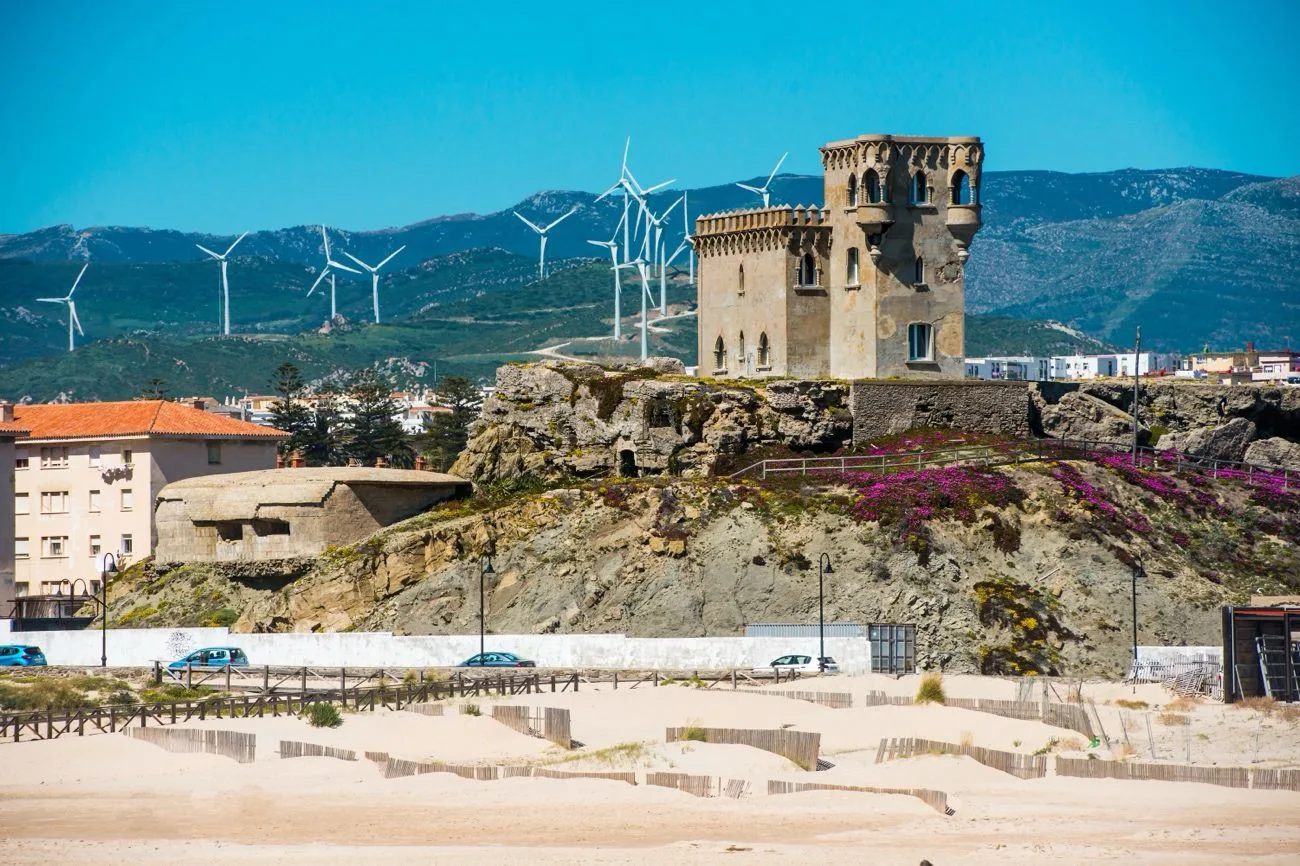
Located at the southernmost point of mainland Europe, Tarifa is a town where wind, history and surf culture come together. Its identity blends an Islamic medina, medieval battles and a modern, cosmopolitan atmosphere. Walk its historic walls and narrow streets where Atlantic and Mediterranean cultures meet.
- Guzmán el Bueno Castle: One of Spain’s best-preserved fortresses, dating from 960. Walk the ramparts for remarkable views of Africa and discover the medieval legend of Guzmán el Bueno.
- Isla de las Palomas and the Zero Point: At the southern tip of Europe, a causeway divides the Atlantic from the Mediterranean, offering a unique geographical experience among lighthouses and Phoenician remains.
- Baelo Claudia (Bolonia): A short distance away lie the exceptionally well-preserved ruins of this Roman town, including a theatre, forum and temples beside one of Spain’s most beautiful dunes.
- Old Town and Puerta de Jerez: A maze of narrow white streets preserves the former medina’s layout. The Puerta de Jerez marks the entrance to a lively centre of Andalusian courtyards, Gothic churches such as San Mateo and bohemian, multicultural squares.
- Nature and Wildlife Watching: Tarifa is a southern cultural hub and a natural sanctuary. Its wild beaches offer opportunities to watch cetaceans and migratory birds, making it an exceptional place to discover the Strait’s biodiversity.
Ronda:
The Dream City Above the Gorge
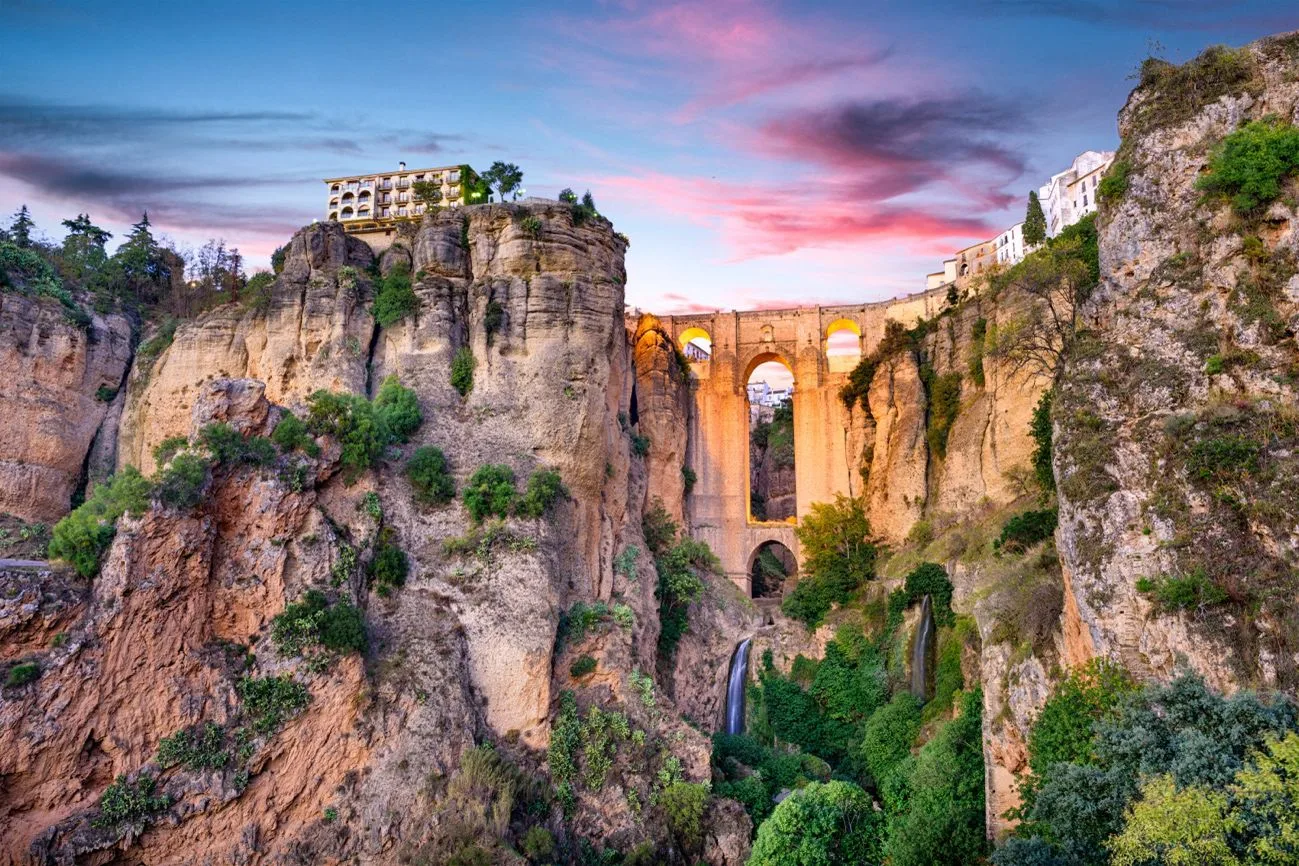
Perched on a plateau divided by a dramatic gorge, Ronda embodies the romance of Andalusia. The contrast between its Moorish old town and eighteenth-century new town creates a breathtaking setting that has captivated artists and writers including Hemingway and Rilke.
- The New Bridge: Ronda’s most famous landmark. This eighteenth-century engineering masterpiece connects the town across a gorge nearly 100 metres deep. Views from the Alameda del Tajo viewpoints are breathtaking.
- The Royal Maestranza Bullring: One of the world’s oldest and most monumental bullrings. Built entirely of stone, it is associated with the origins of modern bullfighting and Spanish neoclassical architecture.
- The Old Town: A maze of cobbled streets with historic palaces such as Casa de San Juan Bosco and Mondragón Palace, once the residence of Moorish rulers, with gardens overlooking the precipice.
- Ronda’s Arab Baths: Located in the former Jewish quarter, these are among Europe’s best-preserved Arab baths. Their star-shaped skylights create a magical underground atmosphere.
- The Moorish King’s Mine: An impressive fourteenth-century waterworks. More than 200 steps carved into the rock lead down to the Guadalevín River at the bottom of the gorge.
- Church of Santa María la Mayor: Built over an old mosque, this fascinating church combines Gothic, Renaissance and Baroque elements in one monument.
Jerez:
A World of Sherry, Horses and Flamenco
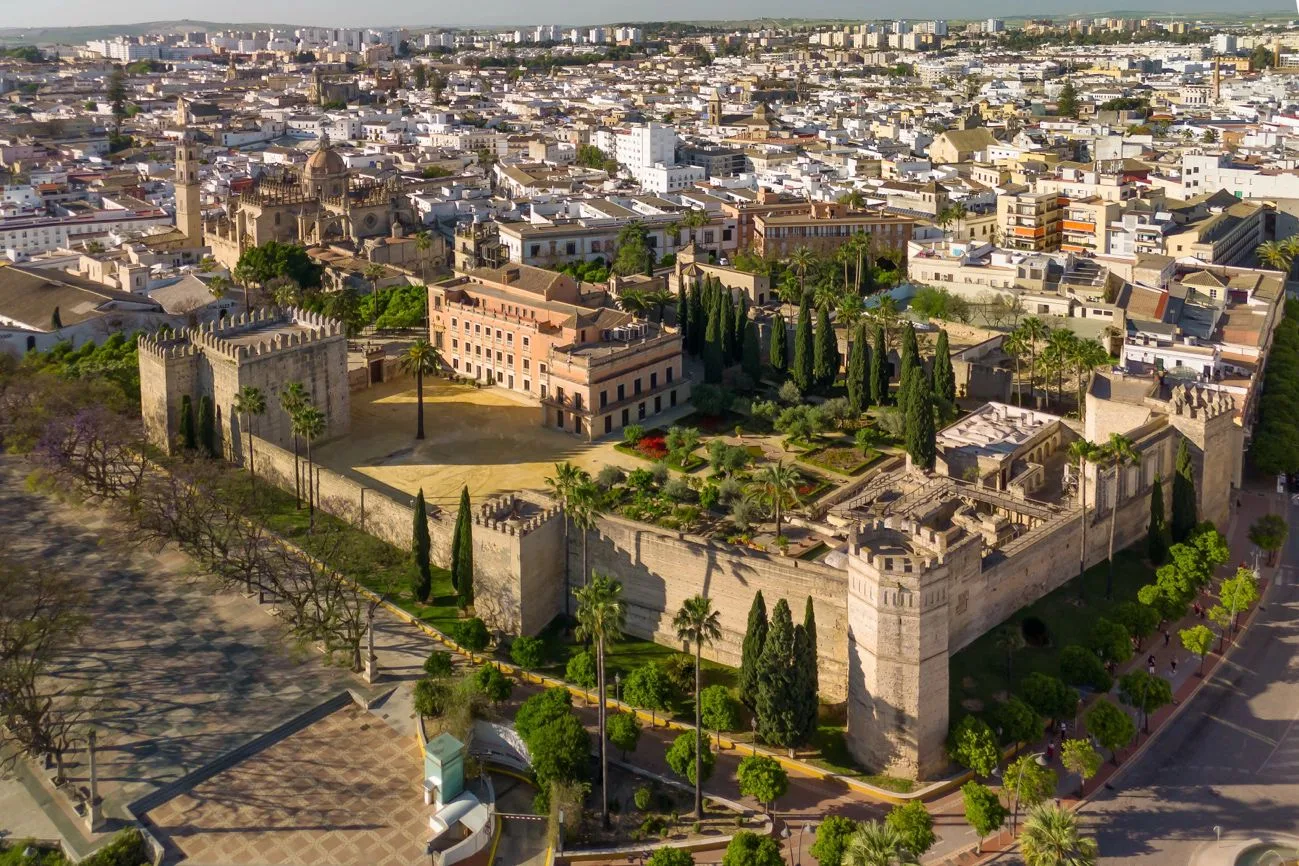
Jerez is an elegant Andalusian city in the heart of Cádiz province. World-famous for its fortified wine,sherry, it is also a centre of equestrian culture and a cradle of flamenco. Its aristocratic palaces, historic wineries and traditional neighbourhoods capture an unforgettable Andalusian spirit.
- The Cathedrals of Wine (Wineries): Jerez is the world capital of brandy and sherry. Wineries such as Tío Pepe and Williams & Humbert are architectural landmarks with soaring roofs and rows of barrels where wine ages under the traditional solera system.
- Alcázar of Jerez: A fine example of twelfth-century Almohad architecture, including a former mosque converted into a chapel and a camera obscura offering real-time views of the city.
- Royal Andalusian School of Equestrian Art: Horses take centre stage in the world-famous ‘How the Andalusian Horses Dance’ show, an equestrian ballet performed to Spanish music in eighteenth-century-style costumes.
- Santiago and San Miguel Neighbourhoods: Two traditional Jerez districts steeped in flamenco history. Santiago is famous for its deep-rooted Romani flamenco culture, while San Miguel combines majestic architecture with a lively local atmosphere.
- Cathedral of San Salvador: This imposing cathedral combines Gothic, Baroque and Neoclassical styles. Built over the former Great Mosque, it is known for its spectacular dome and separate bell tower.
- Atalaya Museums: Home to the unusual Palace of Time, a museum with one of Europe’s finest collections of historic clocks, all working and synchronised.
- Charterhouse of Santa María de la Defensión: Just outside the city, this monastery is one of the province’s most important religious monuments, renowned for its Renaissance entrance and links to the origins of the Carthusian horse breed.
Tangier and Ceuta:
A Journey Between Worlds
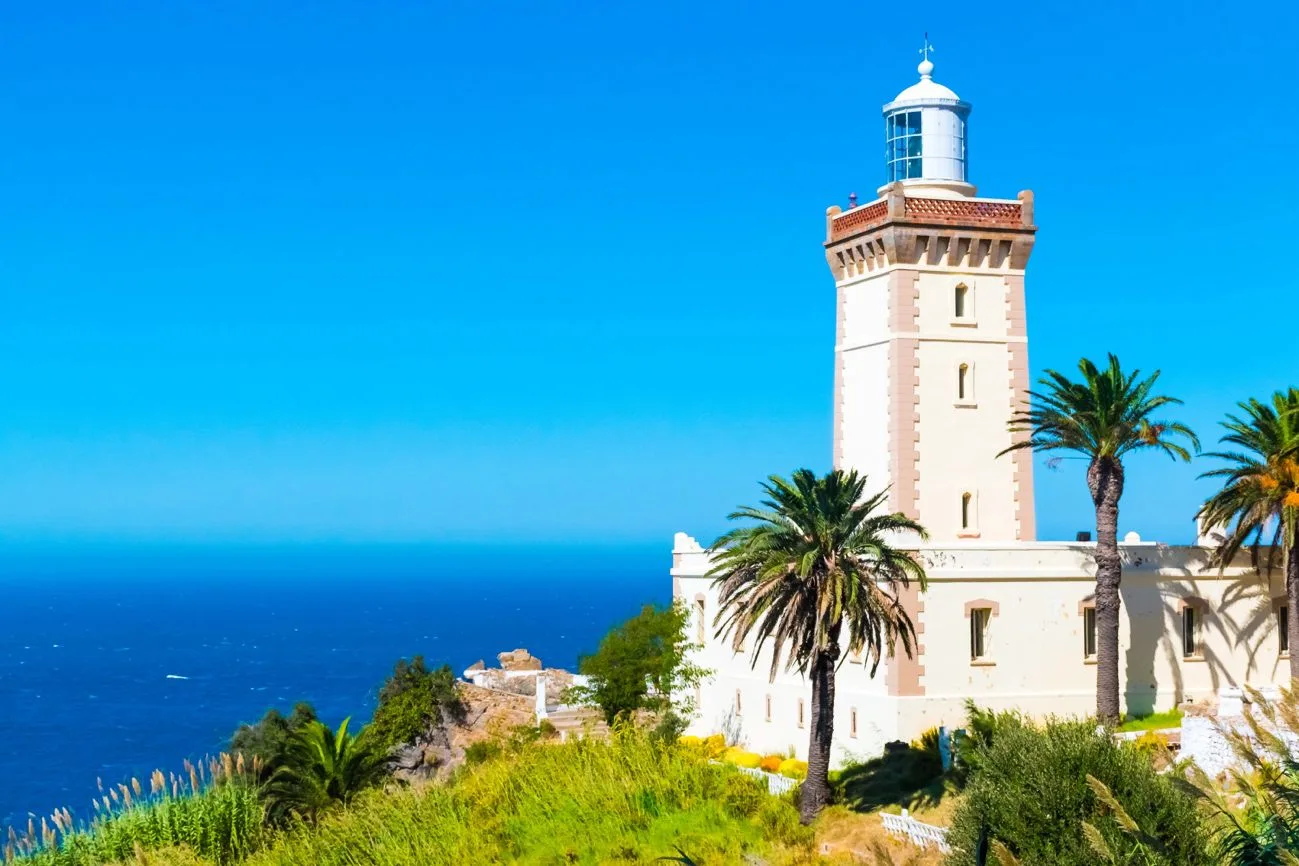
The Strait is not only a border; it is also a bridge. Travellers can have breakfast in Spain and lunch in North Africa. While Ceuta has a distinctive Spanish identity shaped by its location on the African coast, Tangier is Morocco’s legendary gateway, a cosmopolitan city once home to spies, Beat Generation writers and international artists.
Tangier: Gateway to Africa (Morocco)
A captivating city where bustling souks meet the elegance of its colonial past.
- The Medina and Kasbah: Wander through historic alleyways and step back in time. The fortified upper Kasbah offers magnificent Strait views and the Museum of Mediterranean Cultures.
- Petit Socco and Café Hafa: Legendary places associated with figures such as Churchill, the Rolling Stones and Paul Bowles, who came for mint tea overlooking the sea. The bohemian atmosphere remains.
- Caves of Hercules: These caves outside the city open to the Atlantic through a natural arch resembling the map of Africa. According to myth, Hercules rested here after separating the continents.
Ceuta: Pearl of the Mediterranean (Spain)
A Spanish autonomous city whose Christian, Muslim, Hindu and Jewish traditions make it a remarkable open-air cultural museum.
- The Royal Walls and Navigable Moat: A unique fortified complex with a saltwater channel through which small vessels can pass, dividing the historic and modern city.
- Mediterranean Maritime Park: Designed by Canarian artist César Manrique, this oasis of saltwater lagoons, waterfalls and exotic gardens resembles a fairytale fortress by the sea.
- San Antonio and García Aldave Viewpoints: These viewpoints offer the reverse perspective across the Strait. On clear days, Gibraltar and the Rock of Santa Catalina appear remarkably close.
THE TRIANGLE OF
ANDALUSIAN CAPITALS
For a deeper cultural immersion,
these cities are well worth the journey:
Seville:
The Heart of the Baroque South
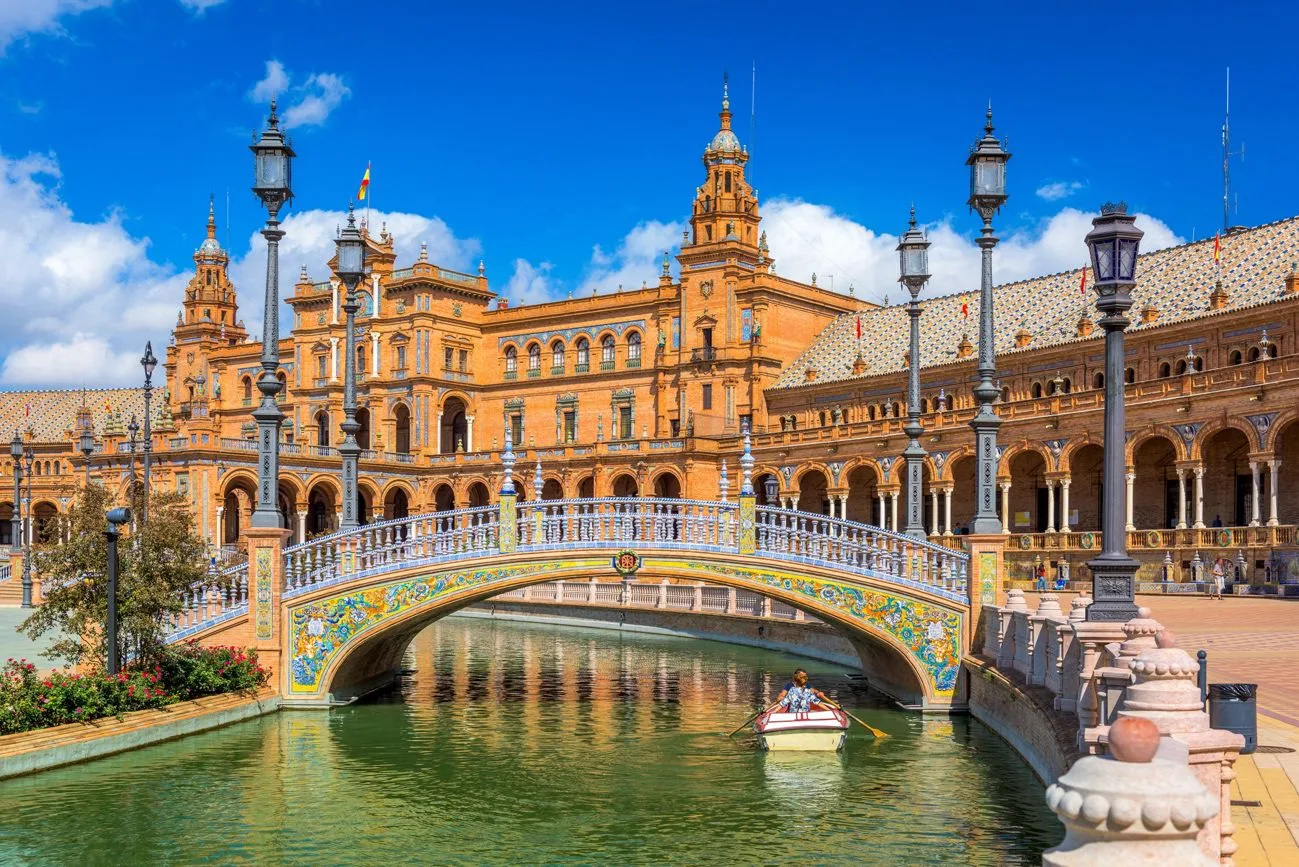
Seville is a city you feel in the air. The Seville Cathedral, the world’s largest Gothic cathedral and resting place of Christopher Columbus, and the Giralda dominate the skyline. The Royal Alcázar, a filming location for Game of Thrones, is a beautiful working Mudéjar palace. Lose yourself in the Santa Cruz neighbourhood or cross the river to Triana, where flamenco and ceramics shape the district’s identity.
Málaga:
A New Cultural Capital of the Mediterranean
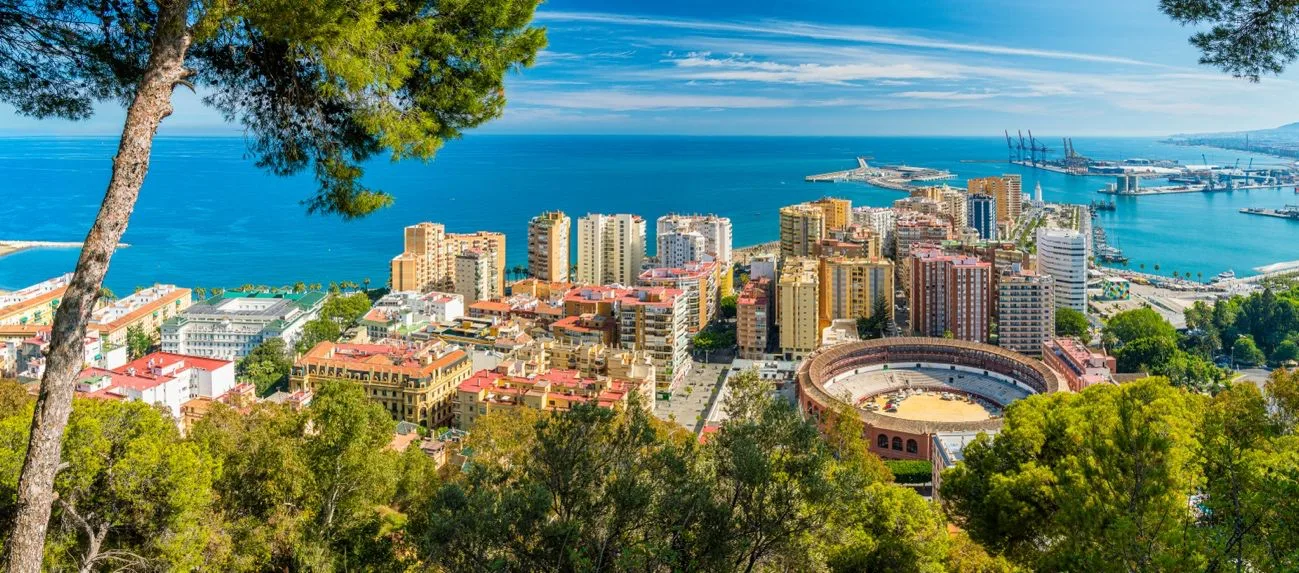
The birthplace of Picasso has reinvented itself as a major international arts destination. Its museum district includes the Picasso Museum, the Pompidou Centre and the Russian Museum, all close to the modern, lively harbour. Málaga also has ancient landmarks such as its Roman Theatre and Alcazaba , a Moorish palace-fortress overlooked by Gibralfaro. Enjoy grilled sardines at the seaside restaurants of Pedregalejo.
Granada:
The Last Nasrid Kingdom and a Mountain Jewel
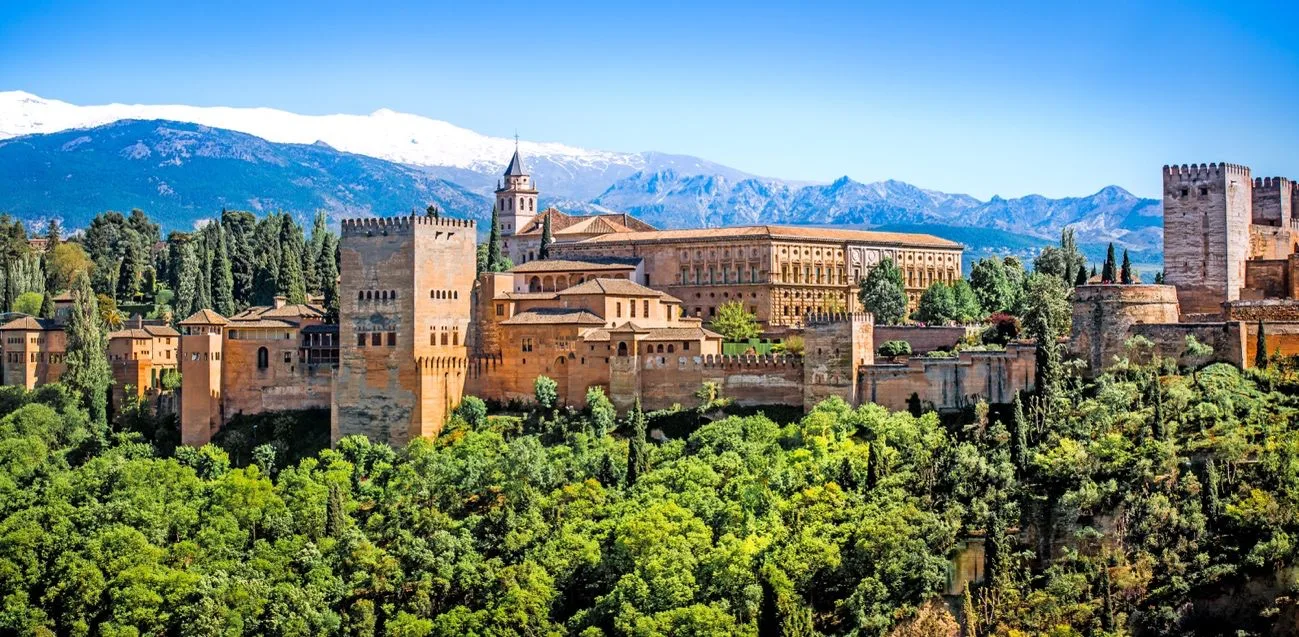
With the peaks of the Sierra Nevada as a backdrop, Granada is a city of almost unreal beauty. The Alhambra is one of the world’s most spectacular and best-preserved Islamic palace complexes, with gardens, courtyards and water features. Book well in advance. Across the valley, the Albaicín preserves its medieval lanes and traditional walled houses. Climb to the San Nicolás Viewpoint at sunset for extraordinary views. Below, Sacromonte comes alive with flamenco performances in its caves.
A note for sailors: Many of these destinations can be reached by sea or by a short road journey. For help arranging Alhambra tickets or private transfers to Ronda, ask at the Alcaidesa Marina harbour office.